
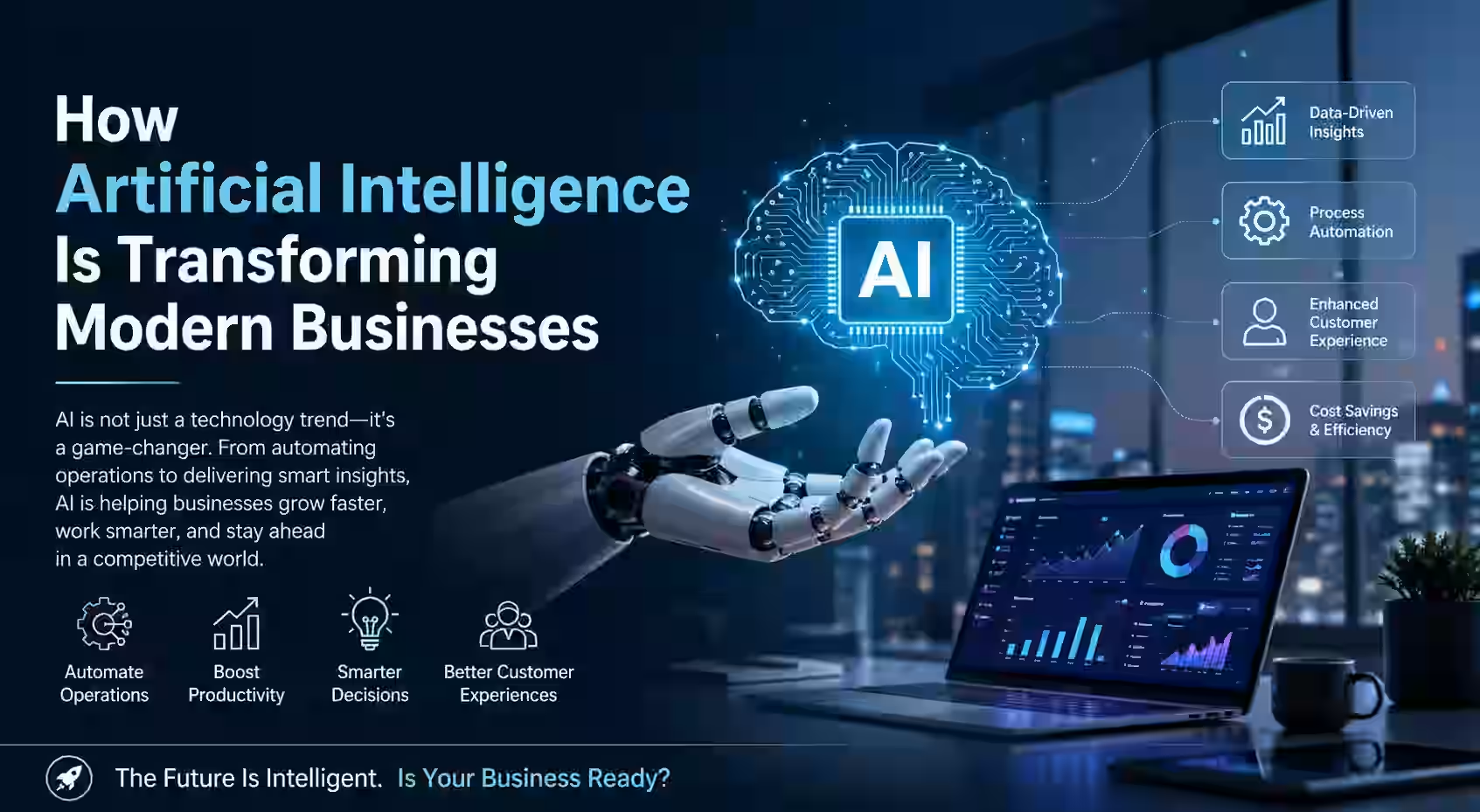

Artificial Intelligence (AI) is no longer just a futuristic concept. It has become an important part of modern business, helping companies automate processes, understand data, improve customer experiences, and make faster decisions.
From startups to large enterprises, businesses across industries are adopting AI-powered solutions to increase productivity and stay competitive in a rapidly changing digital world.
What Is Artificial Intelligence?
Artificial Intelligence refers to technologies that enable computers and software to perform tasks that normally require human intelligence. These tasks can include understanding language, recognizing images, analyzing information, making predictions, and learning from data.
Modern AI solutions can be integrated into websites, mobile applications, enterprise software, customer-support systems, marketing platforms, and business automation tools.
How AI Is Changing the IT Industry
The IT industry is one of the biggest beneficiaries of artificial intelligence. AI is helping development teams build smarter applications while reducing repetitive work and improving operational efficiency.
Some major applications of AI in IT include:
1. AI-Powered Software Development
AI tools can assist developers with writing code, identifying errors, generating documentation, and improving existing applications.
This allows development teams to spend more time solving complex business problems instead of performing repetitive coding tasks.
2. Intelligent Chatbots and Virtual Assistants
AI-powered chatbots can communicate with customers, answer frequently asked questions, provide product information, and assist users 24/7.
Businesses can integrate intelligent virtual assistants into websites, mobile apps, WhatsApp, and customer-support platforms.
3. Business Process Automation
Many repetitive business operations can be automated using AI.
For example, AI can help automate:
- Data entry and processing
- Document analysis
- Customer support
- Email classification
- Report generation
- Invoice processing
- Lead qualification
- Appointment management
Automation reduces manual effort and allows employees to focus on more valuable activities.
4. Data Analysis and Business Intelligence
Businesses generate huge amounts of data every day. AI can analyze this information and identify patterns, trends, and opportunities.
AI-powered analytics can help organizations understand customer behavior, forecast demand, identify potential risks, and make data-driven decisions.
5. Personalized Customer Experiences
AI enables businesses to provide more personalized experiences.
Recommendation engines can analyze user behavior and suggest products, services, or content that are more relevant to individual customers.
This can improve customer engagement and increase conversions.
Benefits of AI for Businesses
Implementing AI can provide several advantages when it is designed around real business requirements.
Improved Productivity: AI can handle repetitive tasks and help employees complete work faster.
Better Decision-Making: AI can analyze large datasets and provide useful insights for business decisions.
Reduced Operational Costs: Automation can reduce the amount of manual work required for repetitive processes.
24/7 Customer Support: AI-powered assistants can provide support outside traditional business hours.
Scalability: AI solutions can help businesses handle increasing volumes of customers, data, and transactions.
Improved Accuracy: Automated systems can reduce certain types of human errors in repetitive processes.
AI and Custom Software Development
Every business has different requirements. Instead of using generic AI tools, companies can integrate AI directly into their existing software and workflows.
A custom AI-powered solution may include:
- AI chatbots
- Recommendation systems
- Predictive analytics
- Document processing
- Voice-based assistants
- Image recognition
- Fraud detection
- Smart search
- AI-powered dashboards
- Workflow automation
For example, an e-commerce platform can use AI to recommend products, analyze customer behavior, and provide automated support. A healthcare platform can use AI to organize information and improve administrative workflows.