
In the fast-paced world of Information Technology, keeping systems running smoothly is a non-stop challenge. We often focus on the glamorous aspects of coding new features or deploying innovative cloud solutions, but the most crucial work is often the least visible: monitoring and observability.
Our latest blog post delves into the art of making the invisible visible. As an IT professional, you understand that downtime is not an option. True system stability comes not just from knowing if a system is up, but understanding its health at every level.
From Metrics to Insights
We transition from basic monitoring (checking "up/down" status) to comprehensive observability. This means collecting and analyzing:
-
Metrics: Quantifiable data points like CPU usage, memory consumption, and network latency. These tell us what is happening.
-
Logs: Detailed records of application and system events. These help us understand where a problem originated.
-
Traces: The complete journey of a request as it traverses microservices. These are essential for identifying distributed bottlenecks.
When these three pillars are combined, they provide the deep insights required to troubleshoot complex microservices and cloud-native architectures.
The Observability Stack
We explore the essential tools that make observability possible. Modern IT shops rely on powerful combinations like:
-
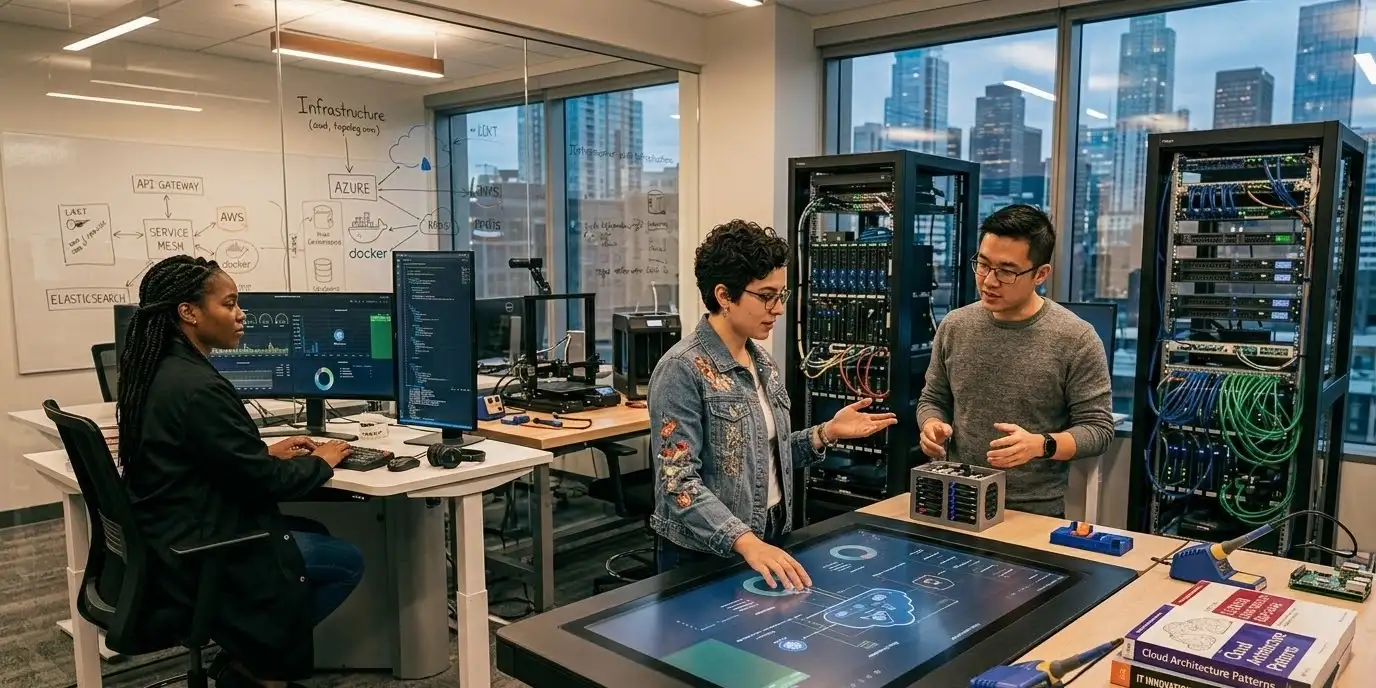
Prometheus and Grafana: For collecting and visualizing real-time metrics, as seen in the dashboards and complex graphs our engineers are analyzing.
-
ELK Stack (Elasticsearch, Logstash, Kibana): The gold standard for aggregating, searching, and visualizing logs.
-
Distributed Tracing Tools: Solutions like Jaeger or Zipkin help map request paths across services.
Beyond the Tech: The Human Element
Observability isn't just about tools; it's about building a proactive culture. Successful IT teams use this data to:
-
Anticipate Problems: Identifying trends before they lead to failure.
-
Optimize Performance: Making systems more efficient.
-
Enhance Security: Detecting anomalies that might indicate a breach.
In this field, the quiet moments are just opportunities to gain deeper clarity. Mastering observability ensures your systems are robust, and your team is empowered.